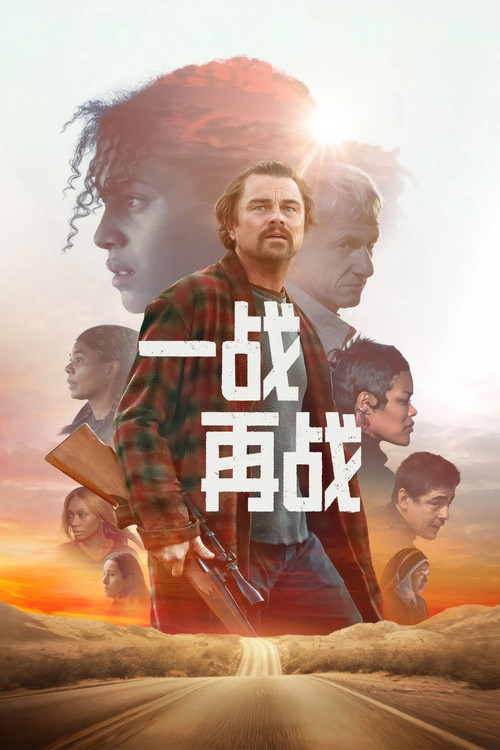
**Review of “Once More Into the Fray”**
In a world where nostalgia for the past often clashes with the harsh realities of the present, *Once More Into the Fray*—directed by the ever-visionary Martin Scorsese—takes us on a wild ride through the psychological remnants of a revolution gone awry. If you ever fancied a dystopian vacation mixed with a dash of tragicomedy, this film is your ticket. Who wouldn’t want to spend time with a paranoid rebel and his fiercely independent daughter in a post-apocalyptic landscape where every shadow could be the ghost of bad decisions past?
At the helm, Scorsese proves once again that he is a wizard behind the camera. His expert use of lighting amplifies the haunted undertones of the characters’ emotional states. The greys and browns of the desolate surroundings contrast sharply with the vibrant spirit of *Vera*, played brilliantly by Chace Infinity, whose resilience lights up even the darkest corners of her father *Bob’s* (Leonardo DiCaprio) mind. Speaking of things that light up—did anyone else notice how *Sean Penn*’s character practically glows like the embodiment of unresolved conflict?
The narrative unfolds with a tight pacing that mirrors Bob’s frantic search for Vera, creating an emotional rollercoaster rife with highs and lows. There’s a pivotal line where Bob, in a moment of vulnerability, says, “I fought for a better world, only to cage myself in fear.” This line perfectly encapsulates his internal struggle and the film’s core theme: the haunting consequences of the choices we make.
One can’t help but draw parallels with classics like *Apocalypse Now* and *The Road*. While those films focus on external battles, *Once More Into the Fray* dives into the war within. The film innovates by merging personal conflict with a societal critique, showcasing how deeply individual histories can resonate with larger cultural themes.
In terms of performances, DiCaprio’s portrayal of Bob is both haunting and heart-wrenching. Each twitch of his brow and shaky exhale tells a backstory that words alone cannot convey. Coupled with Chace’s dynamic portrayal of Vera, their father-daughter relationship becomes the emotional backbone of the film, creating a poignant exploration of trust and redemption.
The film masterfully employs soundscapes that heighten tension and evoke empathy. As the soundtrack swells during climactic moments, you might find yourself shedding a tear or two—Scorsese’s music choices are about as subtle as a sledgehammer dipped in emotional syrup.
In conclusion, *Once More Into the Fray* isn’t just a film; it’s a journey into the ramifications of our past decisions with a side of witty banter and fierce loyalty. While it may not reinvent the wheel, it certainly gives it a good spin. I would rate it a solid 7.653 out of 10. If you’re in the mood for introspection wrapped in a touch of dark humor, grab some popcorn and buckle up—it’s a wild ride.
—
**《一战再战》影评**
在怀旧与现实严酷的碰撞中,马丁·斯科塞斯执导的《一战再战》带我们踏上了一个关于心理创伤和革命遗留问题的疯狂之旅。如果你想享受一场与疯狂的革命者和他坚韧的女儿共度的后末世假期,这部影片正是你的伴侣。在一个每个阴影都可能是糟糕决策的幽灵的世界中,谁不想和鲍勃(莱昂纳多·迪卡普里奥 饰)这样一个偏执的反叛者及其女儿薇拉(蔡斯·英菲尼迪 饰)共度时光呢?
斯科塞斯导演再次证明了自己在镜头背后的魔法。通过精妙的光影运用,他放大了角色情感状态的阴郁基调。荒凉环境中的灰褐色与薇拉的活力形成鲜明对比,蕴含了蔡斯演绎的坚韧精神,仿佛在黑暗的角落中也能闪耀灵魂的光辉。说到光亮,西恩·潘的角色简直像是未解冲突的具象,几乎在荧幕上发光。
剧情紧凑的节奏映衬了鲍勃寻找薇拉的焦虑,创造出情感高低起伏的过山车。影片有一句关键台词,鲍勃在脆弱时刻说道:“我为更好的世界而战,却只让自己在恐惧中囚禁。”这句话完美契合了他的内心斗争,以及影片的核心主题:我们所做选择的影响永远不会消逝。
这部电影不禁使人联想到《现代启示录》和《末日戒备》等经典之作。虽然那些影片着重于外部战争,但《一战再战》则深入探讨内心的战争。影片通过将个人冲突与社会批判相结合,展现了 individual histories如何与更大文化主题产生共鸣。
在表演上,迪卡普里奥的鲍勃角色深邃而痛苦。他每个眉头的微颤、每一次叹息都传达出难以言述的背景故事。结合蔡斯对薇拉活力四射的演绎,两人之间的父女关系成为了影片的情感支柱,深刻探讨了信任与救赎。
影片在声效上的巧妙运用提升了紧张气氛,引发共鸣。当音乐在高潮闪烁间高亢升腾时,你可能会忍不住隐忍泪水——斯科塞斯的音乐选择如同浸泡在情感糖浆中的大锤,毫不含糊。
总之,《一战再战》不仅仅是一部电影,它更像是对过去选择影响的深刻探讨,身披幽默的外衣。如果它没有重新发明轮子,至少也给轮子来了一记精彩的旋转。我愿为这部电影打个7.653分。如果你渴望从黑暗幽默中得到一点启示,那就快准备好你的爆米花,坐上这趟狂野之旅吧。
TMDB评分7.653