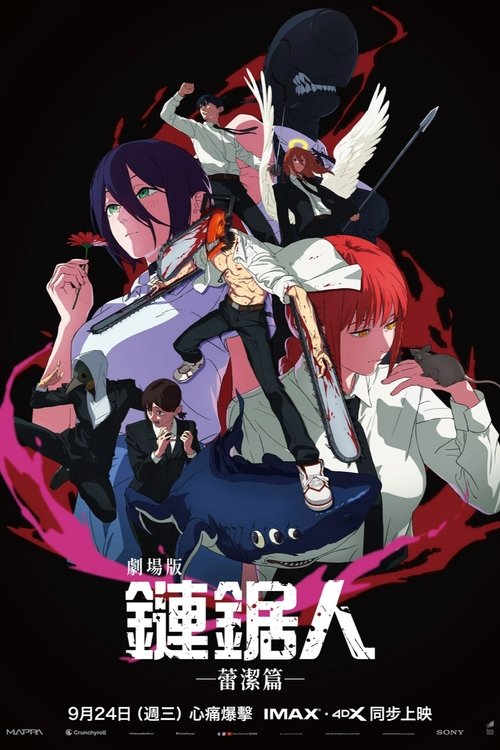
### Title: Chainsaw Man: Reze Arc
In the vibrant cinematic world of *Chainsaw Man*, the Reze Arc transports us into a whirlwind of chaos and charm, offering a unique blend of horror, comedy, and a sprinkle of romance. You might say it’s like mixing pineapple on pizza; unexpected, yet perhaps delightful in its own right. The film continues the thrilling exploits of Denji, our chainsaw-wielding protagonist, who embarks on a roller-coaster of love and demonic negotiations. Just when he thinks he’s found a moment of respite with the enchanting Reze, life throws a few curveballs—who knew demons and rainy days seldom mix?
Directed by the visionary Fujimoto Tatsuki, known for his deft hand in blending humor with horror, the film reminisces its anime roots while standing proudly as a theatrical experience. The **cinematography**, bolstered by sharp contrasts and dynamic angles, ingeniously captures the frenetic pace of both Denji’s battles and his tender moments with Reze. It’s a visual symphony where every frame feels like an electric charge—however, one can’t overlook the disorienting cuts that occasionally leave viewers wondering if they accidentally switched to a different movie.
The performances, particularly from the voice talents, resonate with authenticity. Denji’s portrayal oscillates between over-the-top bravado and unexpected vulnerability. When he breathily utters “I just want to be loved,” it cuts deeper than any chainsaw could. Reze, voiced with a captivating blend of warmth and mystery, draws in the audience, making us ponder if her sweetness is just icing on a demonic cake.
The film’s thematic exploration is as tangled as the chainsaw’s own mechanics. The core conflict revolves around the idea of love—what we crave versus what we fear. The tender yet chaotic dance between Denji and Reze serves as a metaphor for the unpredictability of relationships, with lines like “Is love worth fighting for?” echoing throughout the film, each instance prompting viewers to question their own emotional battles.
In comparing *Chainsaw Man: Reze Arc* to similar genre-bending films like *Attack on Titan* and *Demon Slayer*, it stands out with its comedic timing and unique character dynamics, though it occasionally falters in pacing. It embodies a youthful energy while articulating larger societal themes of self-identity and the dichotomy of desire versus duty.
On a final note, I’d rate this chaotic caricature a solid **7.8 out of 10**. It’s a devilishly good time, perfect for those who enjoy a dash of gore with their romance—and let’s face it, who doesn’t love a little chaos in love?
—
### 标题:电锯人剧场版:蕾塞篇
在活力四射的*电锯人*世界中,蕾塞篇将我们带入了一个充满混乱与魅力的旋风之中,呈现出恐惧、喜剧和浪漫的独特结合。好比是把菠萝放在披萨上,虽然意外,却可能有其独特的美味。影片延续了男主角电次的惊险旅程,他在与魅力少女蕾塞的相遇中,经历了一场爱情与恶魔谈判的过山车。当电次以为终于能在蕾塞的陪伴下找到片刻安宁时,却发现生活似乎总是喜欢给人惊喜——谁能想到恶魔和雨天的结合如此诡异?
由井上和彦执导,他以独特的幽默与恐惧结合的手法而闻名,影片在保留动画根基的同时,作为一部剧场作品自豪地站立。**镜头运用**通过尖锐的对比和动态的视角,巧妙捕捉了电次战斗的迅疾与他与蕾塞温馨时光的宁静。而每一个镜头似乎都通过电击一般的方式击中观众,不过,偶尔的剪接又让人不禁想,自己是不是误入了别的影片。
表演部分,尤其是配音演员的表现,真实而动人。电次的角色在夸张的勇敢与意外的脆弱之间摇摆。当他低声道出“我只想被爱”时,这句台词的分量无疑重于任何电锯的切割。蕾塞的声音则融合了温暖与神秘,让观众在她的甜蜜中陷入深思,是否她的温柔只是一层魔鬼蛋糕上的糖霜。
影片的主题探索如同电锯本身的机械构造,错综复杂。核心冲突围绕着爱欲,探讨我们渴望的与恐惧的之间的对立。电次与蕾塞之间那令人心动又杂乱的舞蹈,成为了人际关系不可预测性的隐喻。影片中诸如“爱值得为之而战吗?”的句子,让人反复咀嚼,促使观众反思自己的情感斗争。
在将*电锯人:蕾塞篇*与*进击的巨人*和*鬼灭之刃*等同类题材进行比较时,它由于独特的喜剧时机和角色动态而脱颖而出,尽管在节奏把控上偶尔显得有些不足。它展现了青春的能量,同时清晰地表达了自我认同与欲望对抗责任的社会主题。
总体来说,我给这部充满魔幻色彩的影片打下一个**7.8分**的评分。对于喜欢在爱情中夹杂一点混乱的人来说,是个绝佳的选择——毕竟,谁不喜欢在爱中增添一点不羁的魔力呢?
TMDB评分7.8