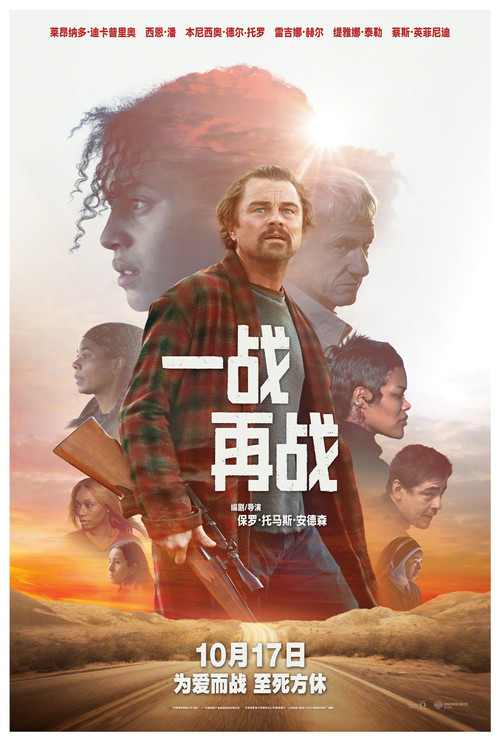
Title: Once More Into the Fray: A Humorous Take on “The Return of the Great War”
Imagine a world where the stakes are high, the coffee is running low, and our legendary revolutionary Bob (played by the ever-charismatic Leonardo DiCaprio) is trying to navigate a landscape populated by paranoia and the odd, mildly aggressive squirrel. In “The Return of the Great War,” directed by the unapologetically brilliant Martin Scorsese, we find ourselves journeying through a post-apocalyptic societal unraveling, all while subtly incorporating elements of dark comedy. The film brilliantly weaves absurdity into its narrative fabric, making us chuckle even in the direst of situations.
Essentially, this movie places us right in the boots of Bob, who has traded his rebellion for a pretty isolated life with his spunky daughter, Vira (portrayed with grace by Chase Infinity). Just when Bob thinks he’s finally found some peace—cue dramatic music—a familiar face from his past, the malevolent arch-nemesis played by Sean Penn, emerges like bad leftovers. The plot thickens as we chase after Vira, who, spoiler alert, has seemingly materialized into thin air.
Scorsese’s directorial skills shine through every meticulously crafted frame—the lens work captures even the tiniest anxiety twitch in Bob’s eye. The cinematography, courtesy of Robbie Ryan, deserves multiple standing ovations, as it plays hide-and-seek with shadows, creating tension that rivals the suspense of unwrapping a difficult gift. Sound design clinks and clatters around us, enhancing the chaotic realm Bob must navigate.
As for the performances, DiCaprio granulates his inner turmoil with unparalleled finesse, perfectly matching Infinity’s unwavering resilience. Yet, it’s Penn’s infrequent appearances that pack a punch—his devil-may-care swagger reminds us just how charmingly sinister he can be.
Diving into themes, the film eloquently discusses the often-ignored costs of revolution—it’s hard to raise a banner for change when you can barely raise your coffee to your lips. The insightful dialogue such as, “Sometimes the fight finds you,” resonates deeply, reflecting the inescapable consequences of one’s actions.
In terms of stylistic comparisons, you can’t help but think of “Falling Down” and “No Country for Old Men”—here we have a protagonist that grapples with madness. However, while those films offer grim reflections of society, Scorsese interjects a touch of levity, showing us that laughter can exist even within chaos.
Ultimately, “The Return of the Great War” scores a solid 7.6 for its deft balance of humor and horror. If you appreciate a mix of irony with your action and existential dread served with a side of witticism, this film is a must-see. Just remember—like Bob, don’t get too comfortable; the chaos is always lurking around the corner.
—
标题:《一战再战》——幽默视角下的深度影评
想象一个这样的世界:高涨的紧张感,咖啡快喝光了,我们传奇的革命者鲍勃(由超具魅力的莱昂纳多·迪卡普里奥饰演)正尝试在一个充满偏执与时不时冒出来的松鼠的景观中探索。在《一战再战》中,由毫不妥协的天才马丁·斯科塞斯执导,我们旅程穿越的是一个后末日社会的解体,悄然融合了黑色幽默的元素。这部电影巧妙地将荒诞融入其叙事织物,使我们即使在最绝望的情况下也能发笑。
基本上,这部电影把我们直接放在了鲍勃的靴子里,他把反抗换成了和他的女儿薇拉(由蔡斯·英菲尼迪优雅演绎)一起过着颇为孤立的生活。就当鲍勃认为自己终于找到了些许安宁——戏剧性的音乐随之而来——他过去的宿敌,那个由西恩·潘饰演的恶棍,像坏掉的剩菜一样冒了出来。情节愈发曲折,我们追赶着突然消失的薇拉,剧透警告:她似乎凭空消失了。
斯科塞斯的导演技巧在每一个精心制作的画面中闪耀——镜头捕捉了鲍勃眼中微小的焦虑抽搐。由罗比·瑞安负责的摄影值得多次站立鼓掌,它跟阴影玩起了捉迷藏,创造出一种与打开难缠礼物相媲美的紧张感。音响设计在我们周围叮当作响,增强了鲍勃必须穿越的混乱领域。
至于表演,迪卡普里奥以无与伦比的精细度展示了他的内心挣扎,完美地呼应了英菲迪的坚定顽强。尽管如此,潘那偶尔的出场真正打出了重拳,他的桀骜不驯提醒我们他是多么迷人又险恶。
深入主题,这部电影巧妙地讨论了革命所带来的代价——当你快要抬起咖啡杯时,筹备一面改变的旗帜是多么的艰难。电影中的独特台词“有时候斗争会找到你”深刻地反映了个人行为的不可避免的后果。
在风格比较方面,你不禁想起《堕落》和《为人民服务》——我们在这里有一个与疯狂搏斗的主角。然而,当那些电影展现社会的阴郁反映时,斯科塞斯却注入了一丝轻松,告诉我们即使在混乱中也可以找到欢笑。
最终,《一战再战》为其幽默与恐怖的巧妙平衡打下了坚实的7.6分。如果你喜欢在你的动作片和存在主义焦虑中加上一点讽刺,这部电影绝对值得一看。只需记住——就像鲍勃一样,不要过于舒适;混乱总是潜伏在角落里。
TMDB评分7.6